
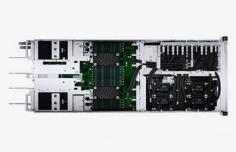
Direct Liquid Cooling Servers vs Air Cooling: What You Should Know
As data centers continue to scale and workloads become more demanding, traditional air cooling struggles to meet modern thermal requirements. This is where liquid cooling systems are transforming the industry, offering a more efficient and sustainable way to manage heat compared to conventional air-based methods. Businesses looking for higher performance and reduced energy waste are increasingly shifting toward next-generation cooling approaches.
Modern liquid cooling systems deliver superior heat transfer by directly targeting high-density heat sources inside servers. Unlike air cooling, which relies on moving large volumes of air, liquid-based methods provide faster, more precise thermal control. This results in improved energy efficiency, lower operating costs, and enhanced system stability for mission-critical environments.
At the heart of this innovation is direct liquid cooling technology, which brings coolant closer to the processor and other heat-generating components. By eliminating unnecessary thermal resistance, this approach significantly improves performance efficiency. Data centers adopting direct liquid cooling technology can achieve higher rack densities while maintaining optimal operating temperatures even under extreme computational loads.
Another important innovation is the liquid loop cooling system, which circulates coolant in a closed loop to continuously absorb and dissipate heat. These systems are designed for scalability and reliability, making them ideal for AI workloads, cloud computing, and high-performance computing environments. Liquid loop cooling systems also reduce the dependency on traditional HVAC infrastructure, making them a smarter long-term investment.
For organizations seeking next-level efficiency, direct liquid cooling servers are becoming the preferred choice. These systems integrate cooling directly into the server architecture, enabling consistent thermal performance and reduced reliance on fans. With direct liquid cooling servers, businesses can achieve better energy efficiency, quieter operation, and improved hardware longevity in demanding environments.
Enterprises adopting advanced server cooling solutions are gaining a significant competitive advantage in today’s data-driven world. These solutions not only reduce carbon footprint but also support the growing need for high-density computing infrastructure. Advanced server cooling solutions are essential for future-ready data centers aiming to balance performance, sustainability, and cost efficiency.
With increasing demand for liquid cooling systems and next-generation infrastructure, organizations investing in these technologies today are positioning themselves for long-term scalability, resilience, and performance leadership in an increasingly digital economy.
