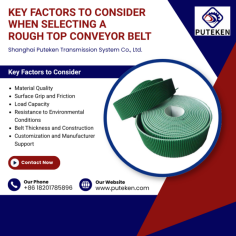
Key Factors to Consider When Selecting a Rough Top Conveyor Belt

Selecting the right Rough Top Conveyor Belt is essential for improving material handling efficiency, reducing product damage, and increasing productivity. Designed with a textured surface that provides excellent grip, a rough top conveyor belt is widely used in industries such as logistics, packaging, airports, printing, food processing, and manufacturing. Choosing the right belt ensures smooth transportation while minimizing maintenance costs and downtime.

Here are the key factors to consider when selecting a rough top conveyor belt:

1. Material Quality

The material of the conveyor belt directly affects its durability and performance. High-quality rubber, PVC, or PU materials provide excellent wear resistance, flexibility, and long-term reliability. Selecting a belt manufactured from premium materials ensures better performance under demanding operating conditions.

2. Surface Grip and Friction

The primary advantage of a Rough Top Conveyor Belt is its superior grip. The textured surface prevents products from slipping, especially when transporting items on inclined conveyors. Consider the type of products being handled and select a belt with an appropriate surface pattern to ensure maximum stability.

3. Load Capacity

Different industries require conveyor belts capable of handling various load capacities. Before selecting a rough top conveyor belt, evaluate the weight and size of the materials being transported. A properly selected belt can handle heavy loads efficiently while maintaining consistent performance.

4. Resistance to Environmental Conditions

Operating environments vary significantly across industries. Factors such as temperature, humidity, oil exposure, and chemical contact should be considered when choosing a conveyor belt. Selecting a belt designed to withstand specific environmental conditions will improve its lifespan and reduce replacement costs.

5. Belt Thickness and Construction

The thickness and structural design of the belt influence its strength and flexibility. Multi-layer constructions often provide additional durability and better impact resistance. Choosing the right thickness helps improve operational efficiency and extends service life.

6. Customization and Manufacturer Support

Working with an experienced manufacturer is equally important. Shanghai Puteken Transmission System Co., Ltd. offers high-quality conveyor solutions designed to meet different industrial requirements. Their Rough Top Conveyor Belt products deliver excellent grip, durability, and reliable performance across multiple applications.

Visit https://tinyurl.com/2xf872j4 to learn more about Rough Top Conveyor Belt, give us a call at +86 18201785896, or email us at putekenbelt@gmail.com

Key Factors to Consider When Selecting a Rough Top Conveyor Belt

Selecting the right Rough Top Conveyor Belt is essential for improving material handling efficiency, reducing product damage, and increasing productivity. Designed with a textured surface that provides excellent grip, a rough top conveyor belt is widely used in industries such as logistics, packaging, airports, printing, food processing, and manufacturing. Choosing the right belt ensures smooth transportation while minimizing maintenance costs and downtime.

Here are the key factors to consider when selecting a rough top conveyor belt:

1. Material Quality

The material of the conveyor belt directly affects its durability and performance. High-quality rubber, PVC, or PU materials provide excellent wear resistance, flexibility, and long-term reliability. Selecting a belt manufactured from premium materials ensures better performance under demanding operating conditions.

2. Surface Grip and Friction

The primary advantage of a Rough Top Conveyor Belt is its superior grip. The textured surface prevents products from slipping, especially when transporting items on inclined conveyors. Consider the type of products being handled and select a belt with an appropriate surface pattern to ensure maximum stability.

3. Load Capacity

Different industries require conveyor belts capable of handling various load capacities. Before selecting a rough top conveyor belt, evaluate the weight and size of the materials being transported. A properly selected belt can handle heavy loads efficiently while maintaining consistent performance.

4. Resistance to Environmental Conditions

Operating environments vary significantly across industries. Factors such as temperature, humidity, oil exposure, and chemical contact should be considered when choosing a conveyor belt. Selecting a belt designed to withstand specific environmental conditions will improve its lifespan and reduce replacement costs.

5. Belt Thickness and Construction

The thickness and structural design of the belt influence its strength and flexibility. Multi-layer constructions often provide additional durability and better impact resistance. Choosing the right thickness helps improve operational efficiency and extends service life.

6. Customization and Manufacturer Support

Working with an experienced manufacturer is equally important. Shanghai Puteken Transmission System Co., Ltd. offers high-quality conveyor solutions designed to meet different industrial requirements. Their Rough Top Conveyor Belt products deliver excellent grip, durability, and reliable performance across multiple applications.

Visit https://tinyurl.com/2xf872j4 to learn more about Rough Top Conveyor Belt, give us a call at +86 18201785896, or email us at [email protected]

Scroll to Top